“Must the Ministry of Culture, Sports and Tourism remain the primary regulator of the gaming industry?”
This question has recently begun circulating again within parts of the gaming industry. It is a discussion that has emerged sporadically in conference presentations, informal industry gatherings, and select parliamentary policy forums. It is not a new topic; it tends to surface whenever the industry enters a period of stagnation.
Relocating oversight is a realistically difficult policy agenda. It is hard to imagine a scenario where legal revisions and negotiations over the reallocation of authority, budgets, and personnel occur solely for the sake of gaming. Furthermore, it is practically impossible for another ministry to seamlessly take over an industry that accounts for more than half of all content promotion statistics.
During industry booms, major agendas like ministerial relocation do not gain traction. It is only when stagnation persists, workers feel unsettled, and the gap with global competitors widens that the question, “Is the current system adequate?” rises to the surface. This question is also a signal that the industry has entered another period of stagnation.
This stagnation is evident in the data. According to the ‘Korea Game White Paper,’ the domestic game usage rate was 50.2% in 2025, a 24.2 percentage point drop in just three years from its 2022 peak of 74.4%. Revenue growth slowed to 3.9% in 2024, reaching ₩23.85 trillion—just one-fifth of the 21.3% growth rate seen during the 2020 COVID-19 boom. Exports also saw a meager 1.3% recovery to $8.5 billion, failing to surpass the record high of $8.98 billion set in 2022.
The fact that the industry has reached the limits of its existing policy framework—to the point where ministerial relocation is being discussed—is a clear signal in itself.
For the past decade, the proposition that ‘games are culture’ has served as a shield for the Korean gaming industry. In the face of repeated regulations and social attacks—such as the shutdown law controversy and the World Health Organization’s attempt to introduce a diagnostic code for ‘Gaming disorder’—framing games as culture acted as a defensive line against the stigma of disease and addiction.
However, this definition works in the exact opposite way when envisioning the future of the industry. Today’s games are more than just narrative content; they are massive technology testbeds that integrate AI, real-time rendering, and cloud computing. Yet, bound by the singular identity of ‘cultural content,’ the industry remains trapped under the ceiling of existing support systems focused on small-scale creator grants, indie game production costs, and overseas marketing support.
Under the ‘Restriction of Special Taxation Act,’ 81 national strategic technologies (as of the February 2026 enforcement decree revision)—including semiconductors, secondary batteries, and displays—receive tax credits of up to 50% for R&D costs and up to 35% for facility investments. In contrast, core gaming technologies like game engines, real-time rendering, and AI content generation are absent from this list, leaving them subject only to general R&D deductions (2–25%).
The Ministry of Culture, Sports and Tourism’s cultural account fund is also focused on fostering small-scale creators. This is why experts repeatedly argue that its scale and nature are ill-suited to support the deep-tech ecosystem of the gaming industry, which requires astronomical R&D investment. Ultimately, critics point out that the Ministry has failed to fulfill its role as the primary regulator of the gaming industry.
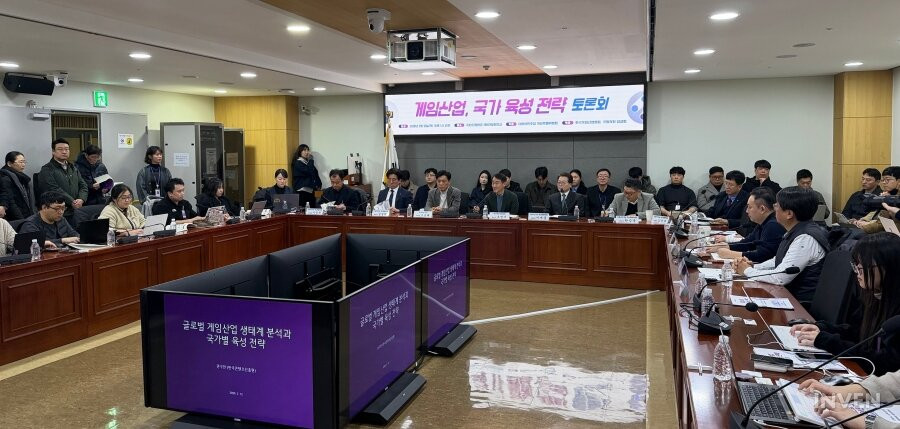
The alternatives currently being discussed involve elevating the industry’s status through ministerial relocation, primarily revolving around two perspectives: technology and exports. Key proposals include transferring oversight to the Ministry of Science and ICT, given that core gaming technology is the foundation for next-generation AI, or to the Ministry of Trade, Industry and Energy, viewing games as a key strategic export asset that could be incorporated into the ‘National High-Tech Strategic Industry Act’ framework.
These discussions are not merely a binary choice between one ministry or another. A dual-model approach is also gaining traction, where industry promotion is led by the Ministry of Science and ICT or the Ministry of Trade, Industry and Energy, while user protection and rating classifications are handled by the Ministry of Culture, Sports and Tourism or a newly established agency. Coincidentally, a ‘Full Amendment to the Game Industry Act,’ proposed by Democratic Party of Korea lawmaker Jo Seung-rae, is currently pending in the National Assembly. If the discussion on ministerial relocation is integrated into the review process for this amendment, it could serve as a catalyst for redesigning the governance structure.
If the Ministry of Culture, Sports and Tourism wishes to maintain jurisdiction, it must propose groundbreaking promotion policies rather than following the same old, outdated support systems. One alternative could be to enact a ‘Content Strategic Industry Act’ (tentative name) to provide tax credits and large-scale R&D support for games and other high-tech convergent content, comparable to those for national high-tech strategic industries. To remain the primary regulator, the Ministry must prove it has the policy weight to match the industry’s needs, moving beyond the ‘culture’ fence that currently confines it.
The proposition that ‘games are culture’ was a shield when protecting the industry from external attacks, but it has become a shackle now that the industry needs to leap into a next-generation technology convergence ecosystem. The persistent talk of ministerial relocation is, in the end, a signal that these shackles must be broken. Whether by moving ministries, creating new laws, or restructuring support systems, the conclusion remains the same: If the government and the industry cannot provide a clear answer to the initial question of “Where should the primary oversight lie?”, the Korean gaming industry will remain trapped within its 20-year-old, outdated framework.
[Read Original]
PakarPBN
A Private Blog Network (PBN) is a collection of websites that are controlled by a single individual or organization and used primarily to build backlinks to a “money site” in order to influence its ranking in search engines such as Google. The core idea behind a PBN is based on the importance of backlinks in Google’s ranking algorithm. Since Google views backlinks as signals of authority and trust, some website owners attempt to artificially create these signals through a controlled network of sites.
In a typical PBN setup, the owner acquires expired or aged domains that already have existing authority, backlinks, and history. These domains are rebuilt with new content and hosted separately, often using different IP addresses, hosting providers, themes, and ownership details to make them appear unrelated. Within the content published on these sites, links are strategically placed that point to the main website the owner wants to rank higher. By doing this, the owner attempts to pass link equity (also known as “link juice”) from the PBN sites to the target website.
The purpose of a PBN is to give the impression that the target website is naturally earning links from multiple independent sources. If done effectively, this can temporarily improve keyword rankings, increase organic visibility, and drive more traffic from search results.