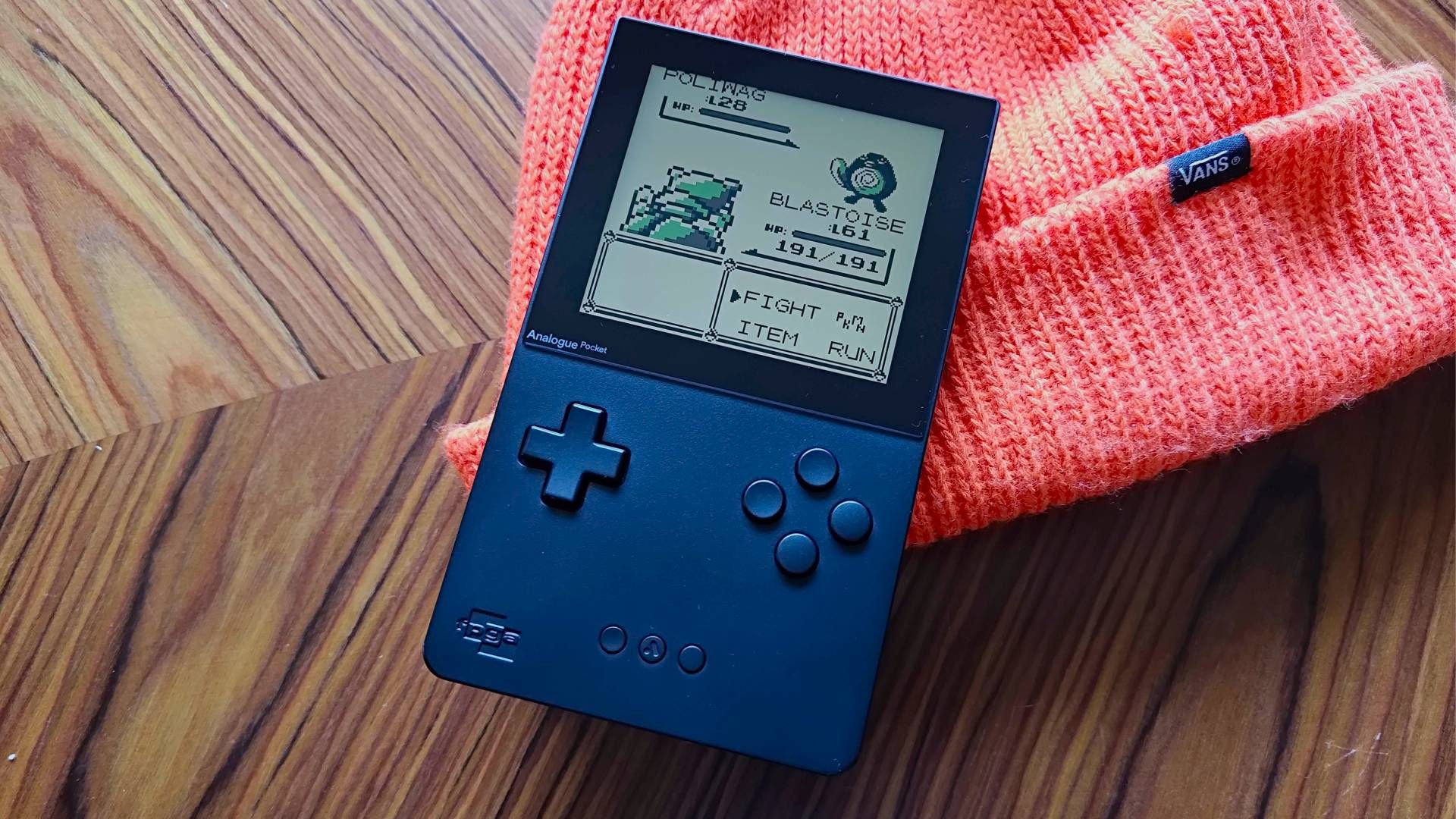
The latest variants of the Analogue Pocket aren’t getting along with Everdrive Game Boy flash carts. At least, that’s according to the retro handheld gadget’s creator, Krikzz, who suggests a new problem running GBA ROMs on the FPGA portable is a hardware issue, but I’m seeing conflicting explanations for why some players can’t run backups using the new handheld batch.
At the centre of the Analogue Pocket and Everdrive fiasco is user elfricko. In a post to the Everdrive forum, the player says their shiny new FPGA portable is throwing a “04 File not found” error when using a GBA Mini cart ($125 at Amazon, FYI). After some initial digging, the issue was quickly narrowed down to something replacing the letter “r” with a “v”, with the example cited being “romcfg to vomcfg.”
The issue sounds like the sort of innocent quirk that’d usually be addressed with a firmware update. However, an additional Reddit threat titled “Possible defective RAM on newest AP batch” points a far more serious finger at the Analogue Pocket itself. elfricko says they know of at least three other people facing the issue, and one user has already reached out to Analogue for support.

Possible defective RAM on newest AP batch; issues with ED GBA Mini from r/AnaloguePocket
In response to the Everdrive issue, Analogue allegedly advised the Pocket owner to “contact the manufacturer for troubleshooting and information.” It seemingly also stated that it “does not provide customer support for 3rd party devices”, which isn’t surprising given the company has zero control over compatible hardware by other entities.
The “good news” is that inserting the Everdrive into a new Analogue Pocket won’t destroy your cart or its ROM library. To get it back up and running again, all you apparently have to do is switch back the changed letters in the file system, but it still won’t work on the FPGA handheld. Users in the forums are currently trying to suss out whether the handheld or the accessory is to blame, but elfricko seems to believe that it’s linked to RAM timings, citing “15 years of experience in computer science.”
Worst-case scenario here is that there’s a serious fault in the new Pocket RAM module’s logic gates that could affect more than just Everdrive carts. Or it could simply be that the timing of the handheld and the flash cart now differs slightly. Either way, not everyone believes the issue lies solely on Analogue’s shoulders, as retro enthusiast Pixel Cherry Ninja says that conflicting sources point towards component changes in the GB Mini itself.
A quick clarification on this.I’ve received conflicting information from different sources. Some are suggesting the issue may be related to component changes in newer EverDrive Minis, while others believe it could be related to changes on the Pocket side.At this stage, I… https://t.co/eA4u4bVVs9June 12, 2026
I sadly don’t own an Everdrive GB Mini, or I’d already be testing it with my slightly older Analogue Pocket model. What I will say, though, is that we don’t have enough information yet to know what the exact fault is and which end of the hardware is to blame. I suspect it won’t be long until enthusiasts root out a cause, and while Analogue says it doesn’t provide support for third-party accessories, I’m pretty sure they’ll have someone on the case, figuring out the FPGA compatibility issue internally.
Unless you’re up for joining the troubleshooting front lines, I’d perhaps hold off on buying an Analogue Pocket for use with an Everdrive. It’s an incredible handheld and the best FPGA device for running Game Boy carts and a bunch of other retro console ROMs out there, so I don’t say that lightly. I’d be surprised if we have to wait long for an official answer, though, and I’m hoping the whole situation can be remedied with a good old firmware update.
Using Valve’s powerhouse for emulating old handhelds? Swing by the best Steam Deck accessories and best Steam Deck docks to soup up your setup.
PakarPBN
A Private Blog Network (PBN) is a collection of websites that are controlled by a single individual or organization and used primarily to build backlinks to a “money site” in order to influence its ranking in search engines such as Google. The core idea behind a PBN is based on the importance of backlinks in Google’s ranking algorithm. Since Google views backlinks as signals of authority and trust, some website owners attempt to artificially create these signals through a controlled network of sites.
In a typical PBN setup, the owner acquires expired or aged domains that already have existing authority, backlinks, and history. These domains are rebuilt with new content and hosted separately, often using different IP addresses, hosting providers, themes, and ownership details to make them appear unrelated. Within the content published on these sites, links are strategically placed that point to the main website the owner wants to rank higher. By doing this, the owner attempts to pass link equity (also known as “link juice”) from the PBN sites to the target website.
The purpose of a PBN is to give the impression that the target website is naturally earning links from multiple independent sources. If done effectively, this can temporarily improve keyword rankings, increase organic visibility, and drive more traffic from search results.